H’ability on BFM Business: virtual reality at the service of rehabilitation
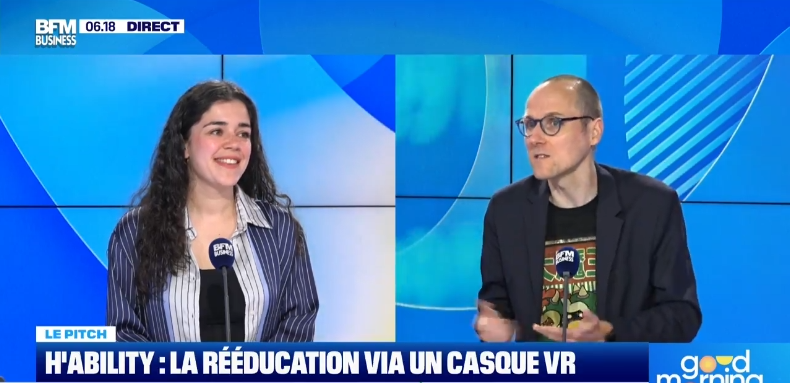
On May 12, 2026, H’ability was the guest of the “Pitch” in the Good Morning Business show on BFM Business. Marie-Odile McKeeney, CEO and co-founder, presented the virtual reality solution for rehabilitation developed by the company. Here is a look back at the key points of this intervention. H’ability, virtual reality at the service of rehabilitation
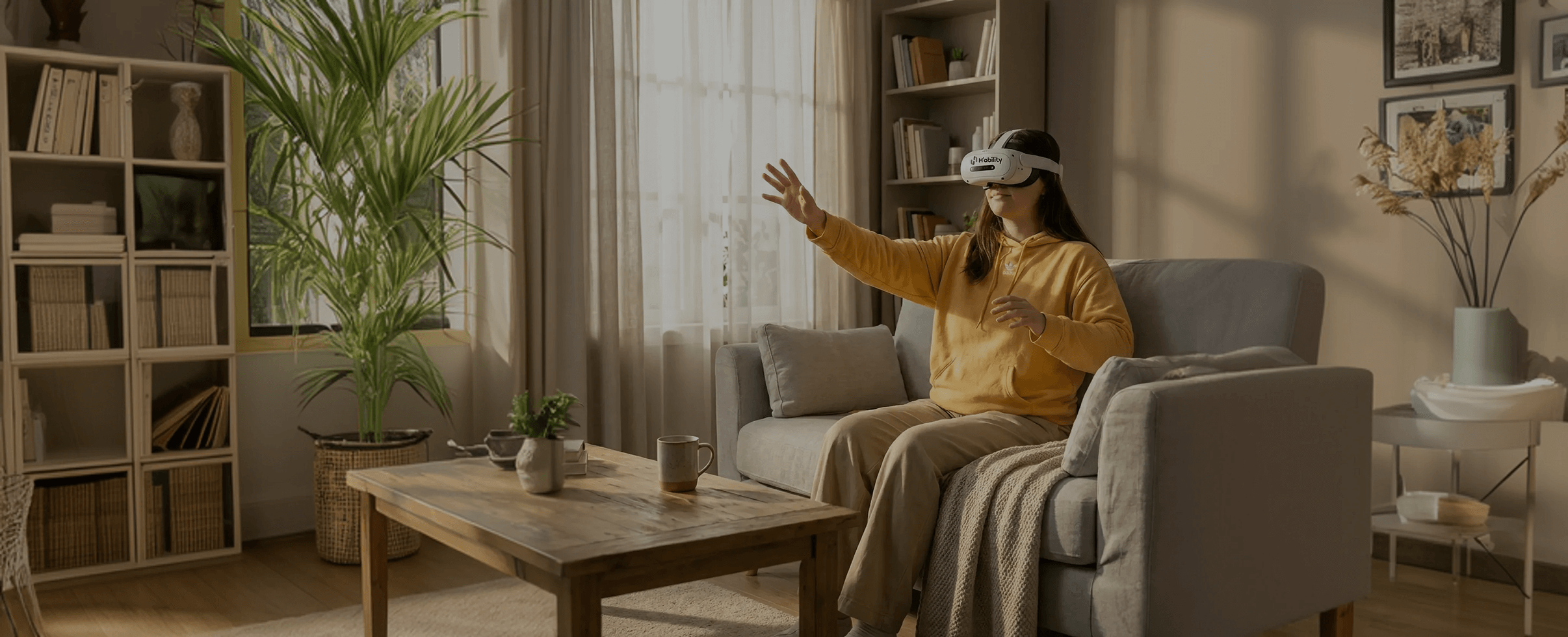
In front of Anthony Morel and the journalists of BFM Business, Marie-Odile McKeeney summed up the company’s mission in a few words: H’ability is a virtual reality and augmented reality solution for rehabilitation. The stated objective is clear: to
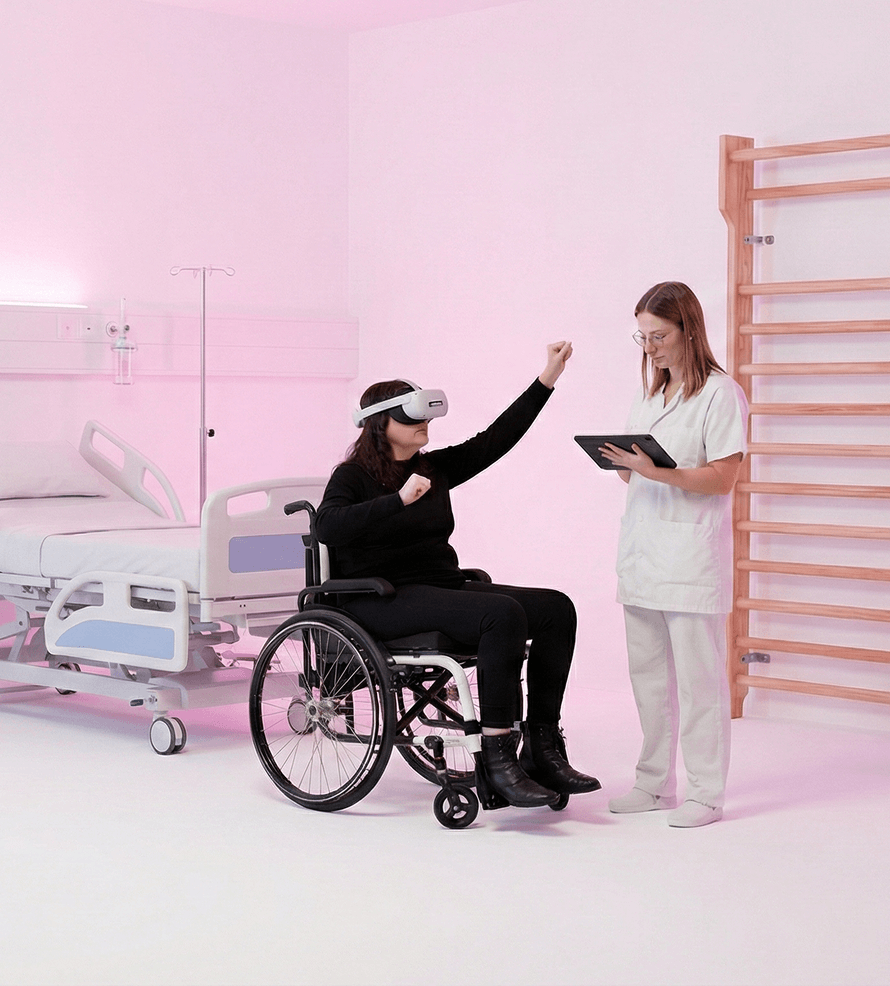
remotivate patients in their rehabilitation journey by offering them immersive, more engaging and less painful experiences.In concrete terms, H’ability equips physiotherapists, occupational therapists and rehabilitation centres so that they can offer this type of care to their patients. Today, the company has developed
more than 55 augmented and virtual reality experiences, and supports
more than 2,900 patients in France and Belgium.
Virtual reality to reduce kinesiophobia
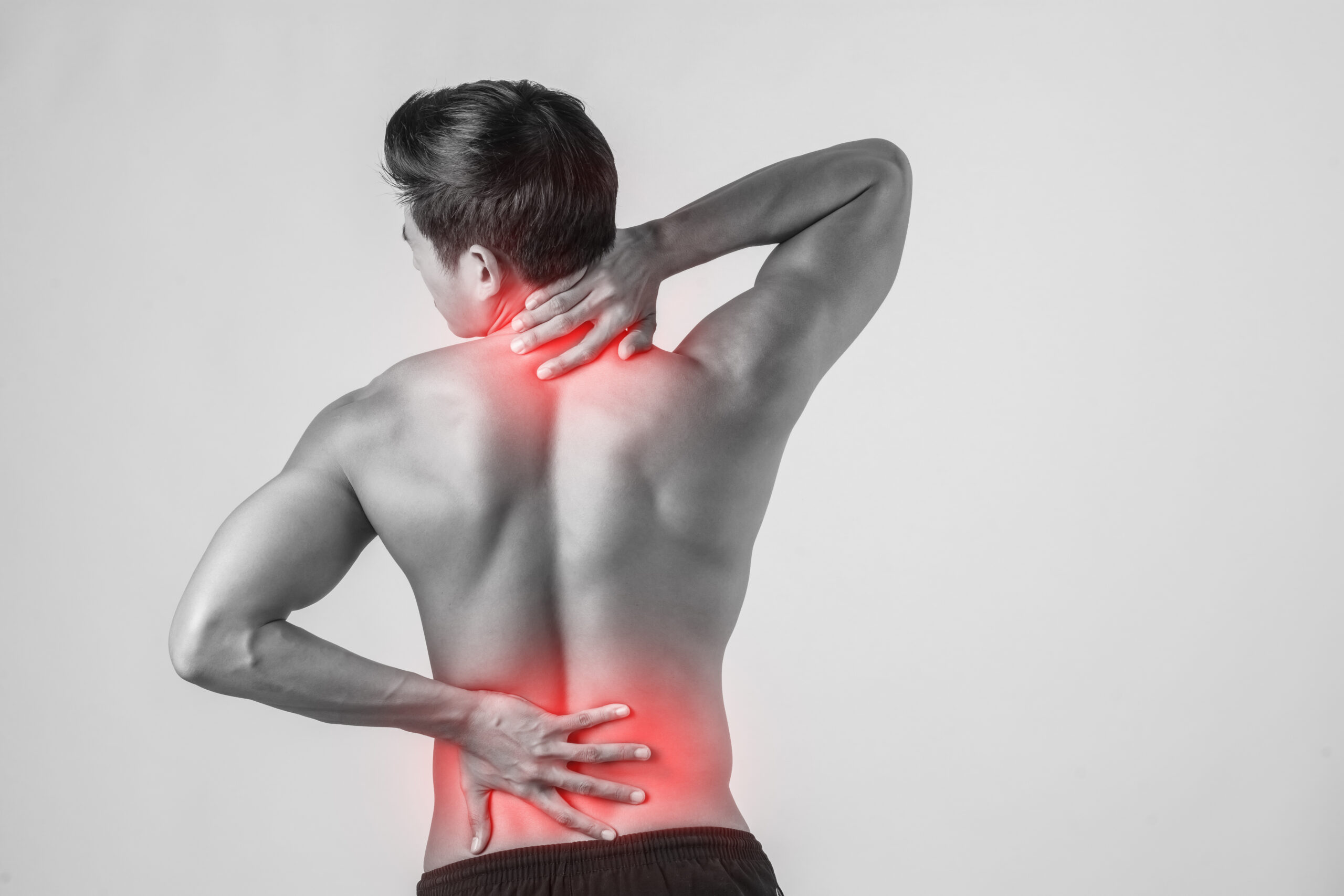
Questioned by Anthony Morel about the interest of immersion, Marie-Odile McKeeney highlighted one of the major benefits of virtual reality in rehabilitation: the reduction of kinesiophobia (the fear of movement in anticipation of pain).As she explained on set, this phenomenon is very common. For example, after back pain, the patient apprehends certain amplitudes in anticipation of the pain, which slows down the progress of rehabilitation. By diverting the patient’s attention through immersion, virtual reality helps to remove this obstacle.
Exercises transformed into games
The central principle of H’ability, as presented in the show, is to transform rehabilitation exercises into games. The idea is to
give meaning to the gesture and to recontextualize it to mask the repetitive aspect of rehabilitation.Marie-Odile McKeeney gave a telling example: instead of performing ten upper limb extensions after an elbow dislocation, the patient will “break blocks while boxing” in virtual reality. The therapeutic gesture remains the same, but the experience becomes fun and motivating.However, she insisted on one essential point: H’ability is a
complementary tool, which enriches existing rehabilitation methods without replacing them. Diversifying approaches leads to better results.
What pathologies are concerned?
Historically, H’ability was first developed for post-stroke rehabilitation, particularly in occupational therapy for chronic pathologies requiring long rehabilitation. But on the set, Marie-Odile McKeeney pointed out that partner practitioners now use the device for many other indications:
rheumatology, traumatology and geriatrics.Regarding efficacy, the co-founder has remained cautious and transparent: clinical studies are underway on several pathologies (post-stroke, low back pain, multiple sclerosis), but as the results are not yet available, no efficacy claim can be announced at this stage. She also recalled that H’ability has
been a Class I medical device since 2023.
Towards a home version: H’ability Home
Finally, one of the major issues addressed during the interview is that of therapeutic compliance. As the BFM Business team recalled, the main challenge is not the session with the physiotherapist, but the exercises to be carried out at home, which are often neglected.To meet this need, as well as the problems of access to care (in rural areas as well as in the Paris region), H’ability is currently finalizing the home version of its system,
H’ability Home. The objective is to accompany the patient on a continuous basis, from the hospital to his home.The company is also in the process of raising funds to support the internationalization of its solution.
Watch H’ability’s appearance on BFM Business
You can watch Marie-Odile McKeeney’s full speech in “Le Pitch” on the BFM Business website:
see the video on BFM Business.To learn more about our device, check out our
virtual reality solution for rehabilitation or learn about our
therapeutic indications.