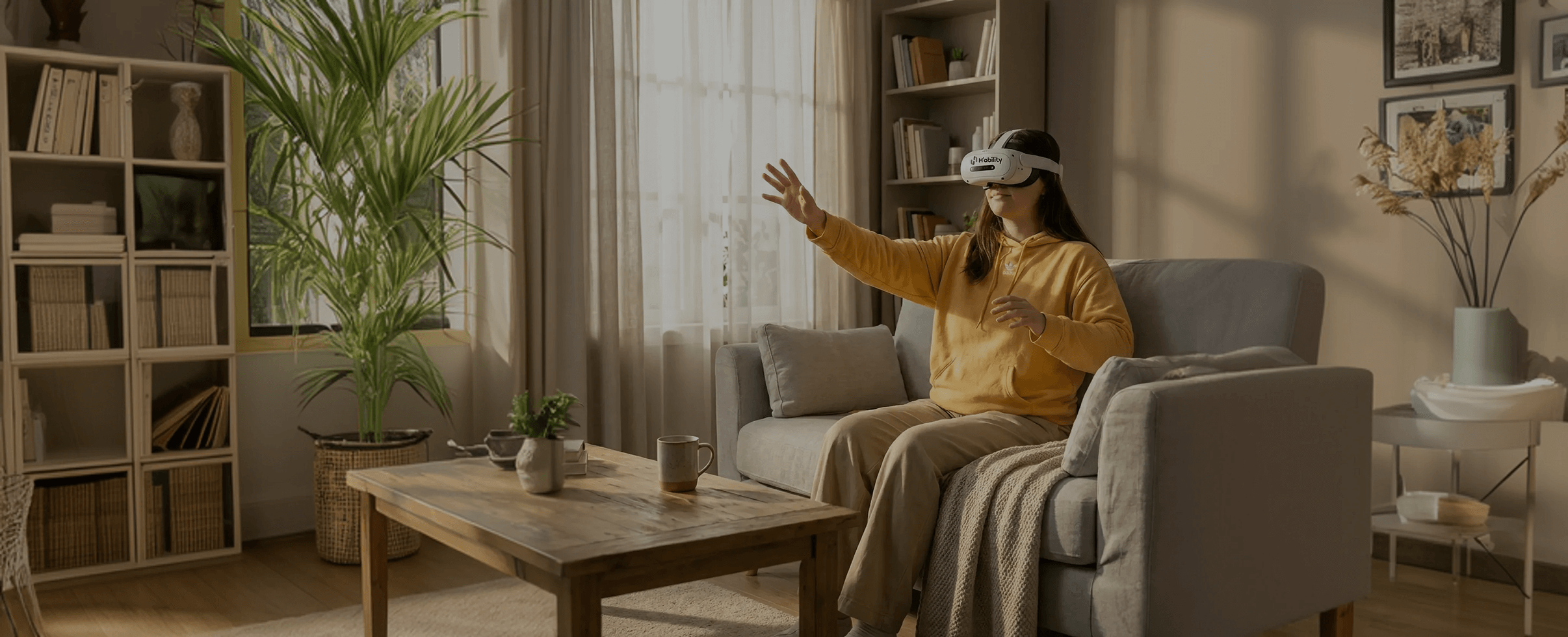
Post-stroke journey: the disruption of the return home and the solutions
Every year in France, stroke affects about 150,000 people and is the leading cause of acquired disability in adults. While…


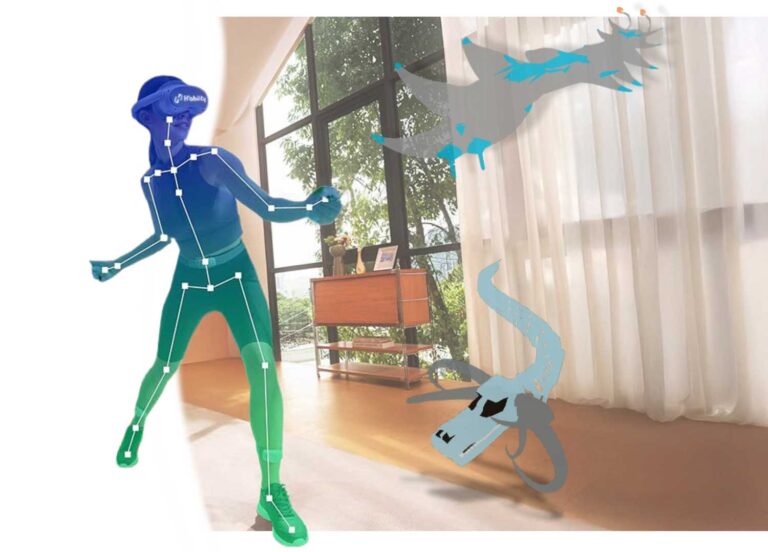
This is another important step for H’ability: home rehabilitation finally becomes a reality with the official launch of H’ability Home. While finding a health professional for rehabilitation is becoming a growing problem in France, especially in medical deserts, this virtual reality telerehabilitation solution allows you to continue care at home, while keeping in touch with your practitioner. Here’s what you need to know.
Finding an available physiotherapist or occupational therapist is now an obstacle course for many patients. This difficulty is not an isolated feeling: it reflects a fundamental trend in the French healthcare system.
The phenomenon of medical deserts is spreading, and rehabilitation professionals are no exception. In many areas, especially in rural areas, waiting times are getting longer and some patients are simply giving up their sessions. Travelling to the practice is also an ordeal for people with reduced mobility or who have just been discharged from hospital.
However, the interruption of rehabilitation has direct consequences: loss of achievements, slowed recovery, demotivation. It is precisely these challenges that remote home rehabilitation responds.
Telerehabilitation consists of continuing rehabilitation at a distance, under the supervision of a health professional. The principle is simple: the practitioner defines a personalized program, the patient carries out his exercises at home, and the professional follows his progress thanks to the data transmitted.
This approach is now well documented. A systematic review by Park & Lee (2024) found robust evidence for the benefits of interactive telerehabilitation with remote monitoring, to improve balance and gait in older adults and neurological patients.
Similarly, a meta-analysis by Truijen et al. (2022) confirmed the positive effect of virtual reality training at home on balance, in patients with Parkinson’s disease, multiple sclerosis and after stroke. His conclusion is clear: telerehabilitation interventions are as effective as conventional therapy. Home rehabilitation is therefore not a last resort, but a credible and complementary alternative.
The main challenge of home rehabilitation is known to all practitioners: compliance. When we entrust exercises to be done alone at home, they are often neglected. This is where virtual reality makes the difference.
By transforming exercises into fun and immersive activities, VR keeps the patient motivated over time. The patient no longer perceives rehabilitation as a repetitive chore: he plays, he progresses, he sees his scores evolve. This commitment is decisive for the regularity of the sessions, and therefore for the results.
A meta-analysis by Bok et al. (2023) confirms that virtual reality rehabilitation at home is particularly effective for the recovery of physical function after stroke, provided that it is based on a structured and personalized program.
“With H’ability, the person can perform movements in a safe environment. It is often a source of wonder for them to realize that they have succeeded in a gesture, and without having been in pain, without them realizing it during the exercise. »
— Ninon Playe, occupational therapist, LADAPT de l’Aube
It is to meet all these challenges that H’ability officially launches H’ability Home, the home version of its virtual reality rehabilitation device.
The goal of H’ability Home is to ensure continuity of care between the hospital, the rehabilitation center and the home. Thanks to the portability of the standalone headset — wireless, computer-free, operational in minutes — the patient continues his or her exercises at home, in a motivating setting. For their part, the physiotherapist or occupational therapist keeps control: they define the program, adjust the difficulty and monitor the progress remotely thanks to the data recorded at each session.
For patients who are far from a practice or living in a medical desert, H’ability Home represents a concrete way to no longer suffer from the disruption of care. For practitioners, it is a way to extend their support beyond face-to-face sessions, without sacrificing the quality of the follow-up.
Important: H’ability Home remains a supervised medical device. Its use at home is always carried out under the supervision of a health professional, who prescribes and manages the rehabilitation. To find out more, discover our therapeutic indications and our virtual reality solution.
What is virtual reality home rehabilitation?
Virtual reality home rehabilitation allows the patient to continue their exercises at home, using a VR headset, under the remote supervision of a health professional. This is the principle of telerehabilitation: the physiotherapist or occupational therapist defines the programme and monitors the progress thanks to the recorded data, while the patient trains independently and motivatingly.
What is H’ability Home?
H’ability Home is the home version of the H’ability device, now available. It makes it possible to extend virtual reality rehabilitation to the patient’s home, ensuring continuity between the hospital, the rehabilitation center and the home, under the supervision of a health professional.
Is virtual reality home rehabilitation effective?
Yes. Several studies show that virtual reality telerehabilitation is at least as effective as conventional rehabilitation. Indeed, a meta-analysis by Truijen et al. (2022) confirms the positive effect of home VR training on balance in Parkinson’s, MS and post-stroke patients. However, the use must remain supervised by a health professional.
Can home rehabilitation compensate for the lack of physiotherapists?
Remotely supervised home rehabilitation is one of the answers to the lack of health professionals, especially in medical deserts. On the other hand, it does not replace the practitioner: it allows the patient to continue exercises between sessions and to maintain a therapeutic link, even when access to a practice is difficult.
How does home rehabilitation maintain the patient’s motivation?
Virtual reality transforms exercises into fun activities, which keeps the patient engaged over time. This is a major asset at home, where exercise adherence is usually low. Thus, the visible scores and progression encourage the patient to continue their rehabilitation regularly.
References:
Every year in France, stroke affects about 150,000 people and is the leading cause of acquired disability in adults. While…

Chronic low back pain is one of the main reasons for physiotherapy consultation and one of the leading causes of…

H’ability on BFM Business: virtual reality at the service of rehabilitation On May 12, 2026, H’ability was the guest of…
The career of Blandine Le Mené, a private occupational therapist, and her use of virtual reality How can virtual reality…