Post-stroke journey: the disruption of the return home and the solutions
Every year in France, stroke affects about 150,000 people and is the leading cause of acquired disability in adults. While…


Every year in France, stroke affects about 150,000 people and is the leading cause of acquired disability in adults. While care in the acute phase has progressed considerably, one moment remains particularly critical in the post-stroke journey: the return home. This is often where rehabilitation is interrupted, due to a lack of available physiotherapists, especially in medical deserts. How can this break in care be avoided? This article is aimed at health professionals and caregivers alike, and explores solutions, including the contribution of virtual reality.
The post-stroke journey generally follows several stages: the acute phase in the hospital (neuro-vascular unit), then an intensive rehabilitation phase in a specialized center (SSR), and finally the return home. It is this last transition that concentrates the most difficulties.
The figures remind us of the stakes. In France, 500,000 people live with the after-effects of a stroke. According to the HAS, in 40% of cases the victims have sequelae of varying severity, and in 25% of cases serious sequelae one year after the accident. However, these after-effects are not inevitable: long-term rehabilitation can really improve quality of life.
The problem is that this continuity is rarely ensured. When he returns home, the patient loses the daily supervision he or she received in the center. The sessions are spaced out, sometimes stopped. And it is precisely at this moment that the gains of rehabilitation are in danger of being lost.
The main cause of this breakdown is the inequality of access to care. In October 2025, the Court of Auditors described the care of stroke victims as a “persistent health divide”. The conclusion is clear: the chain of care, from identification to rehabilitation, remains fragmented and unequal depending on the territory.
In concrete terms, in some rural areas, a quarter of the adult population is more than thirty minutes away from the nearest specialised service. In addition, there is a lack of trained staff and an inadequacy of post-hospital follow-up, which is crucial to limit the after-effects and prevent recurrences.
For the patient and his or her caregiver, the daily reality is often this: finding an available physiotherapist is an obstacle course, waiting times are long, and travelling to the office is exhausting for a person with a disability. Many patients thus find themselves without a solution for continuous rehabilitation.
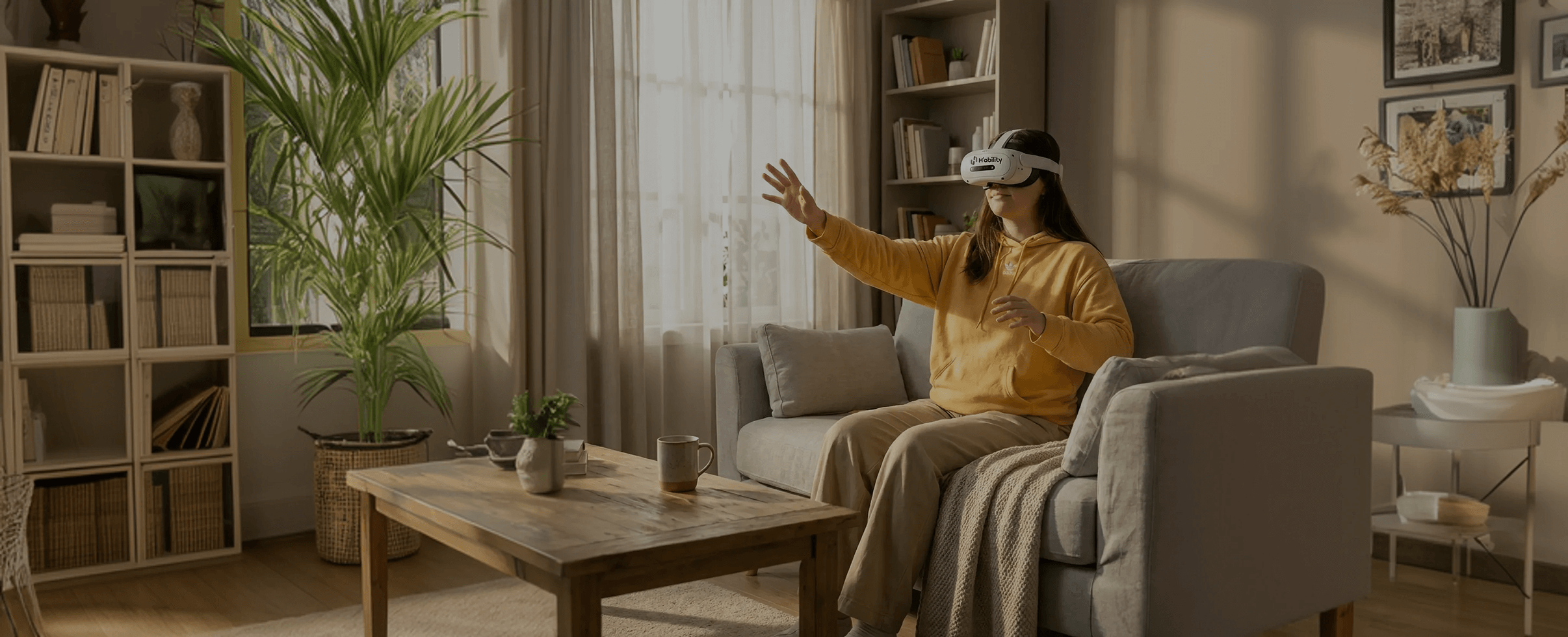
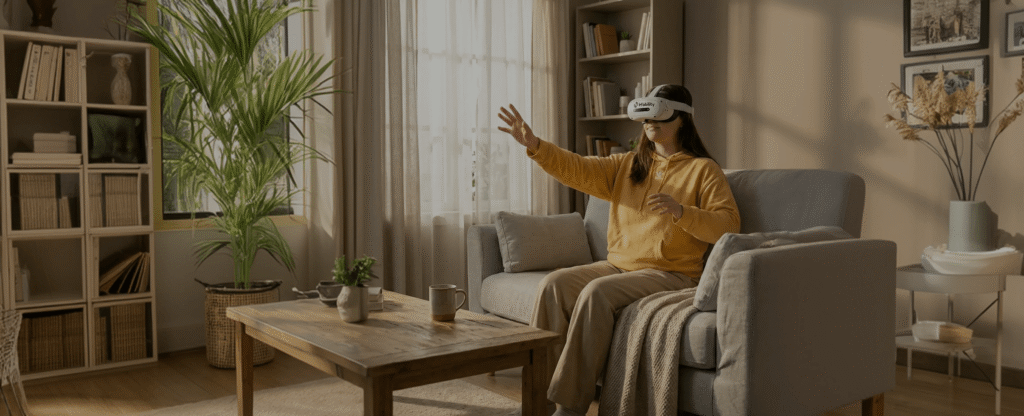
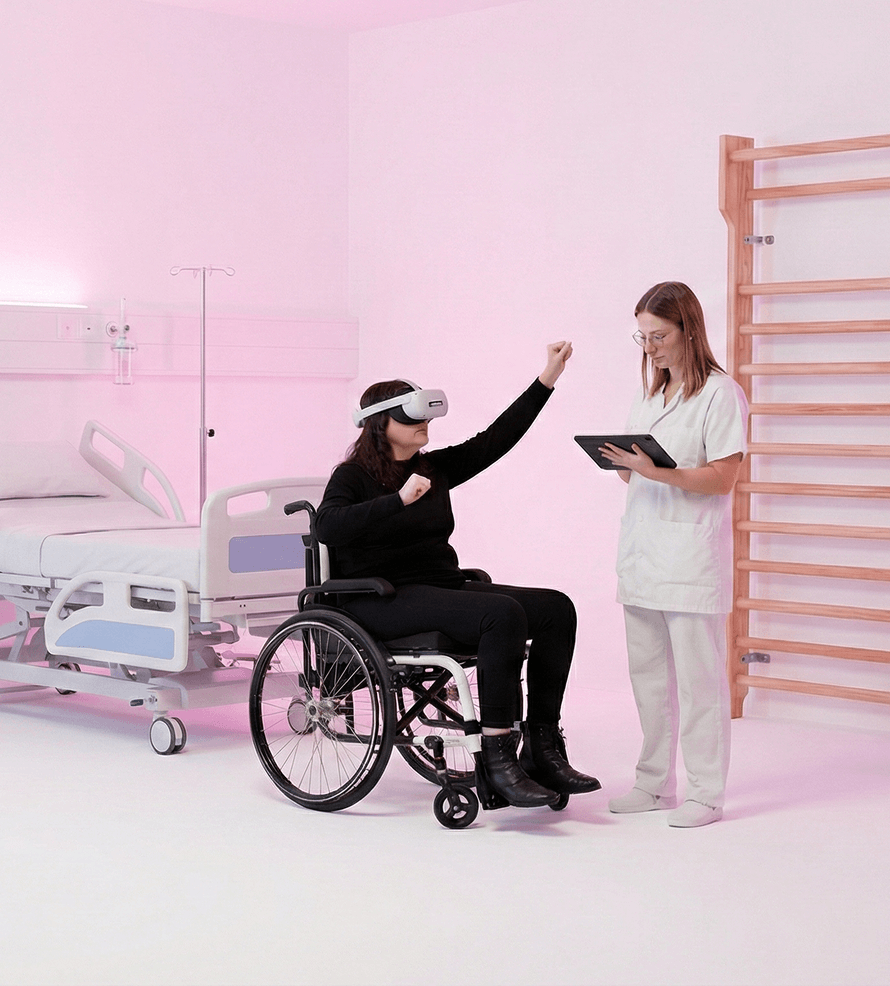
Faced with this observation, virtual reality appears to be a relevant complementary response. It does not replace the physiotherapist, but it allows rehabilitation to be extended between sessions, including at home.
The effectiveness of this approach is now documented. A meta-analysis by Bok et al. (2023), published in the Journal of Clinical Medicine, showed that home virtual reality rehabilitation is particularly effective for physical function after stroke, compared to other rehabilitation technologies. However, the authors emphasize the importance of a structured and personalized program, as well as medical and technical support.
For its part, the meta-review by Khan et al. (2024) confirms, based on high-quality systematic reviews, that virtual reality provides a benefit for the recovery of the upper limb, lower limb, walking and balance, particularly in addition to conventional rehabilitation.
Notably, the HAS now recommends virtual reality to help with post-stroke motor rehabilitation (grade B), alongside walking exercises and mirror therapy. Virtual reality is therefore no longer a technological curiosity: it is an approach recognized by the French health authorities.
It is essential to remember, especially for caregivers: virtual reality rehabilitation at home cannot be improvised. It must always be prescribed and supervised by a health professional — physiotherapist or occupational therapist — who defines the protocol, adjusts the difficulty and monitors the patient’s progress remotely. The system is a tool at the service of the caregiver, not a substitute for his or her expertise. In addition, it is not indicated for patients with severe behavioral disorders.
It is precisely to meet this challenge of continuity that H’ability is developing H’ability Home, the home version of its system, which is currently being finalized.
The aim is to provide a bridge between the hospital, the rehabilitation centre and the patient’s home. Thanks to the portability of the standalone headset (wireless, without computer), the patient can continue his exercises at home, in a fun and motivating setting, while his practitioner monitors his progress remotely thanks to the data recorded at each session.
For patients in rural areas or those who are far from a practice, this solution represents a way of maintaining rehabilitation without interruption, even when access to an on-site professional is limited. For the physiotherapist or occupational therapist, it is a way to extend their support beyond face-to-face sessions.
To find out more, discover our therapeutic indications or our virtual reality solution for rehabilitation.
“With H’ability, the person can perform movements in a safe environment. It is often a source of wonder for them to realize that they have succeeded in a gesture, and without having been in pain, without them realizing it during the exercise. »
— Ninon Playe, occupational therapist, LADAPT de l’Aube
Why is returning home after a stroke a critical step?
Returning home often marks a break in the continuity of rehabilitation. After discharge from the hospital or centre, the patient loses the daily supervision. However, post-stroke rehabilitation must continue over the long term. In addition, the lack of available physiotherapists, particularly in rural areas, aggravates this break in care.
Should post-stroke rehabilitation continue after returning home?
Yes. According to the HAS, the rehabilitation of motor and cognitive functions continued over the long term, including in the chronic phase (beyond 6 months), can improve the quality of life of patients. This is why the interruption of rehabilitation on return home is a factor in the loss of achievements.
Is virtual reality effective for stroke rehabilitation at home?
Yes. A meta-analysis by Bok et al. (2023) showed that virtual reality rehabilitation at home is particularly effective for physical function after stroke, compared to other technologies. The HAS also recommends virtual reality for post-stroke motor rehabilitation (grade B). However, home use must remain supervised by a health professional.
How can we fight against the lack of physiotherapists in rural areas for stroke patients?
Home rehabilitation solutions, supervised remotely by a health professional, are one of the ways to improve access to care. Indeed, they allow the patient to continue exercises between sessions, while maintaining a link with his or her physiotherapist or occupational therapist, including in areas where the supply of care is limited.
What is H’ability Home?
H’ability Home is the home version of the H’ability system, which is currently being finalized. Its objective is to accompany the patient from the hospital to his home, allowing the continuation of rehabilitation in virtual reality under the supervision of a health professional.
References:
Every year in France, stroke affects about 150,000 people and is the leading cause of acquired disability in adults. While…
Chronic low back pain is one of the main reasons for physiotherapy consultation and one of the leading causes of…
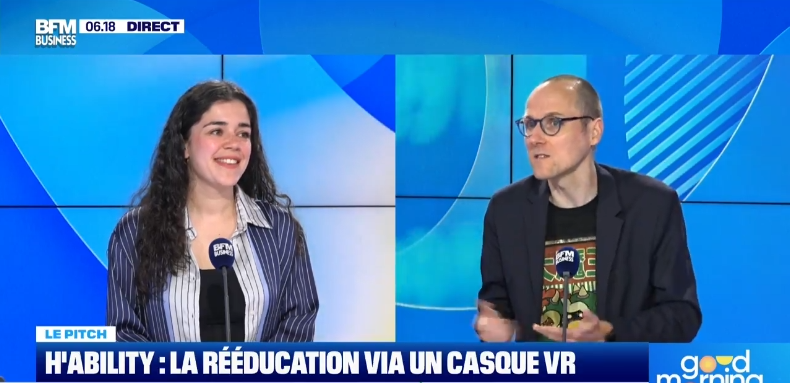
H’ability on BFM Business: virtual reality at the service of rehabilitation On May 12, 2026, H’ability was the guest of…
The career of Blandine Le Mené, a private occupational therapist, and her use of virtual reality How can virtual reality…