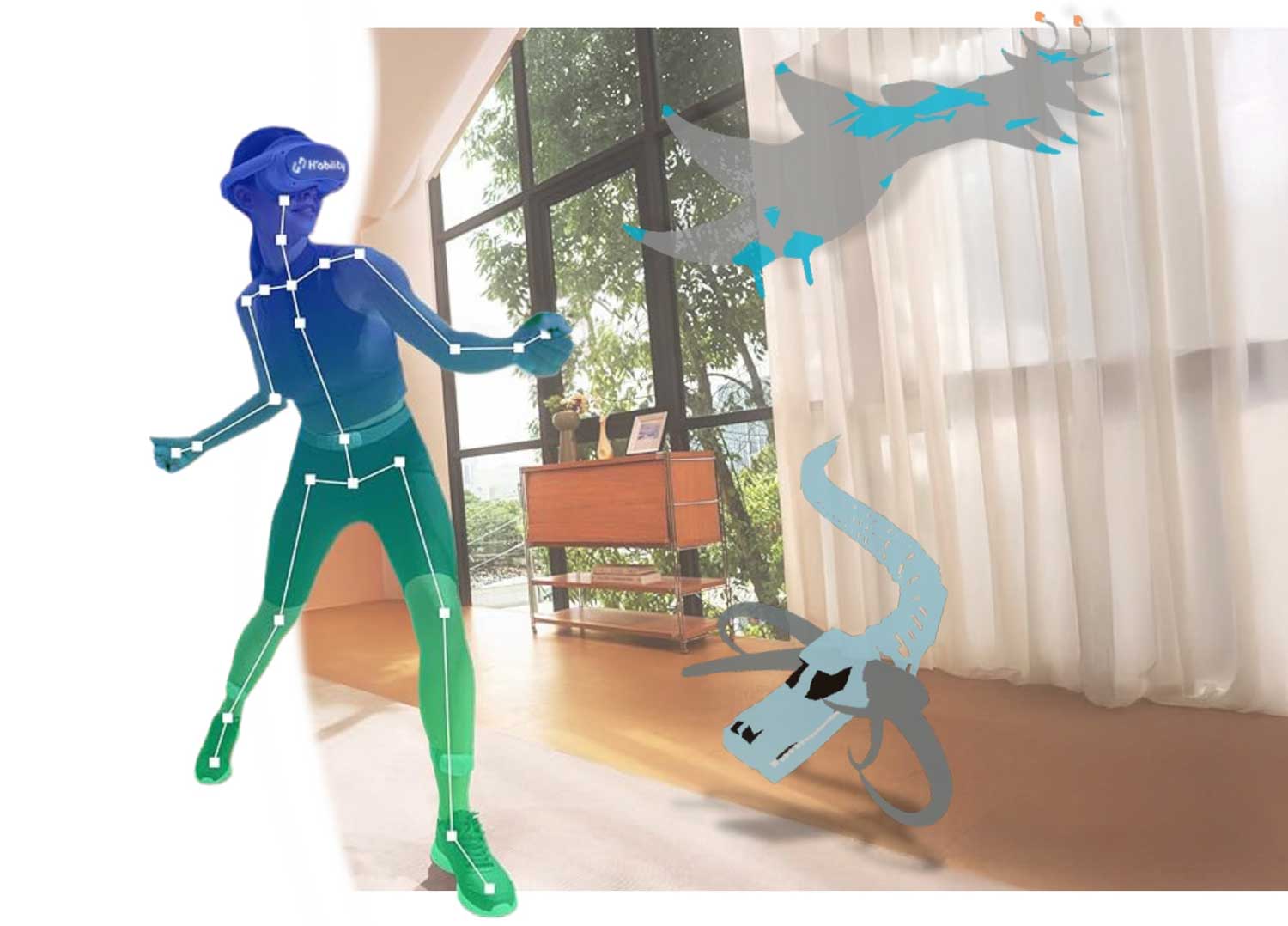
Home rehabilitation: H’ability Home is coming
This is another important step for H’ability: home rehabilitation finally becomes a reality with the official launch of H’ability Home.…


Can immersive virtual reality be integrated into a functional spinal restoration program, and do both patients and caregivers adopt it? This is the question answered by the VRFR study, conducted in five French physical medicine and rehabilitation centers with the H’ability program. Its results are clear: all pre-established criteria of acceptability, feasibility, and safety have been met. A look back at this study and insights from Dr. Romain Champagne, MPR physician at the Laval Hospital Center.

Chronic low back pain is one of the leading causes of functional disability worldwide. For patients for whom initial rehabilitation was not sufficient, the functional spine restoration program is the reference care. It combines, in groups over several weeks, physiotherapy, exercise reconditioning, occupational therapy, and psychological support.
These programs are well established. However, the role of immersive virtual reality within them had never been studied. However, the issue is not only clinical: a tool, however promising, is only useful if patients use it and if care teams integrate it into their practice.
The VRFR study (Virtual Reality in Functional Restoration) is a multicenter and prospective pilot study. It was conducted in five centers:
Twenty-three chronic low back patients aged 18 to 65 and eight caregivers participated. In addition to the usual functional restoration program, patients performed three 20-minute sessions per week for 4 to 5 weeks, with H’ability exercises targeting trunk mobility.
The main objective was not to measure effectiveness, but the acceptance of the helmet by patients and caregivers, assessed by a validated questionnaire (UTAUT2 model) at the beginning and end of the program. Secondary criteria focused on usability, adherence, safety, and the evolution of several clinical indicators.
Before starting, the investigators had set precise success thresholds. All were met.
High acceptance that improves with useOn the patient side, acceptance exceeded the thresholds from the start, with an intention to use 6.24 out of 7. Notably, it improved further after the helmet experience (6.35 out of 7), with significant gains in ease of use, sense of control, attitude towards the tool, and user enjoyment. In other words, trying it is adopting it.
On the healthcareside, acceptance reached the set thresholds (5.50 out of 7) and remained stable throughout the program: the tool integrated into the teams’ operations without disrupting it.
This last point is important for patients with chronic pain. Indeed, a common fear is that movement will trigger pain. Here, patients moved without more pain at the end of exercise.
During the program, kinesiophobia (fear of movement), functional abilities, pain, and motor imaging all improved significantly. However, since the study had no control group, these improvements cannot be attributed solely to virtual reality: they are also the result of the functional restoration program itself. This is precisely why the authors conclude that a randomized controlled trial is necessary.
“When you see painful patients who have a virtual reality headset, you realize they are much more able to move than in the real world. You don’t really know if it’s the fun side, the immersion, the act of visualizing or imagining the movements.
“— Dr. Romain Champagne, MPR doctor, Laval Hospital Center
For him, the value of virtual reality goes beyond the functional restoration program alone. Since patients found the tool very easy to use, it could be integrated at different stages of the journey: in private practice with the physiotherapist, in rehabilitation centers, awaiting entry into the program or after it, or even at home. This is H’ability Home’s ambition, always under the supervision of a healthcare professional.
VRFR answers a first essential question: immersive virtual reality is acceptable, feasible, and safe in a functional spinal restoration program. To situate these results in the existing literature, see our article on chronic low back pain and virtual reality as well as our studies and scientific evidence page.
What is a functional spinal restoration program?
The functional spinal restoration program is a multidisciplinary and intensive management of chronic low back pain, conducted in groups in physical medicine and rehabilitation centers. It is mainly aimed at working-age patients for whom previous rehabilitation has not been sufficient.
What is the VRFR study?
VRFR is a multicenter, prospective pilot study conducted in five physical medicine and rehabilitation centers (Vannes, Cholet, Laval, Rennes, Angers). It evaluated the acceptability and feasibility of immersive virtual reality H’ability integrated into a functional restoration program for chronic low back pain.
Is virtual reality well accepted by lower back patients?
Yes. In the VRFR study, patient acceptance exceeded the thresholds set from the start and improved even better after helmet use. Furthermore, adherence to the sessions reached 91.4% and usability was rated good, with an SUS score of 80.6 out of 100.
Do virtual reality sessions increase lower back pain?
No. In the VRFR study, virtual reality sessions did not worsen pain acutely and no serious adverse events were reported.
Does the VRFR study prove the effectiveness of virtual reality on low back pain?
Not yet. VRFR is a no-control group feasibility study. Kinesiophobia, pain, functional abilities, and motor imaging improved during the program, but these effects remain preliminary. That is why a randomized controlled trial is planned to measure effectiveness.
References:
This is another important step for H’ability: home rehabilitation finally becomes a reality with the official launch of H’ability Home.…
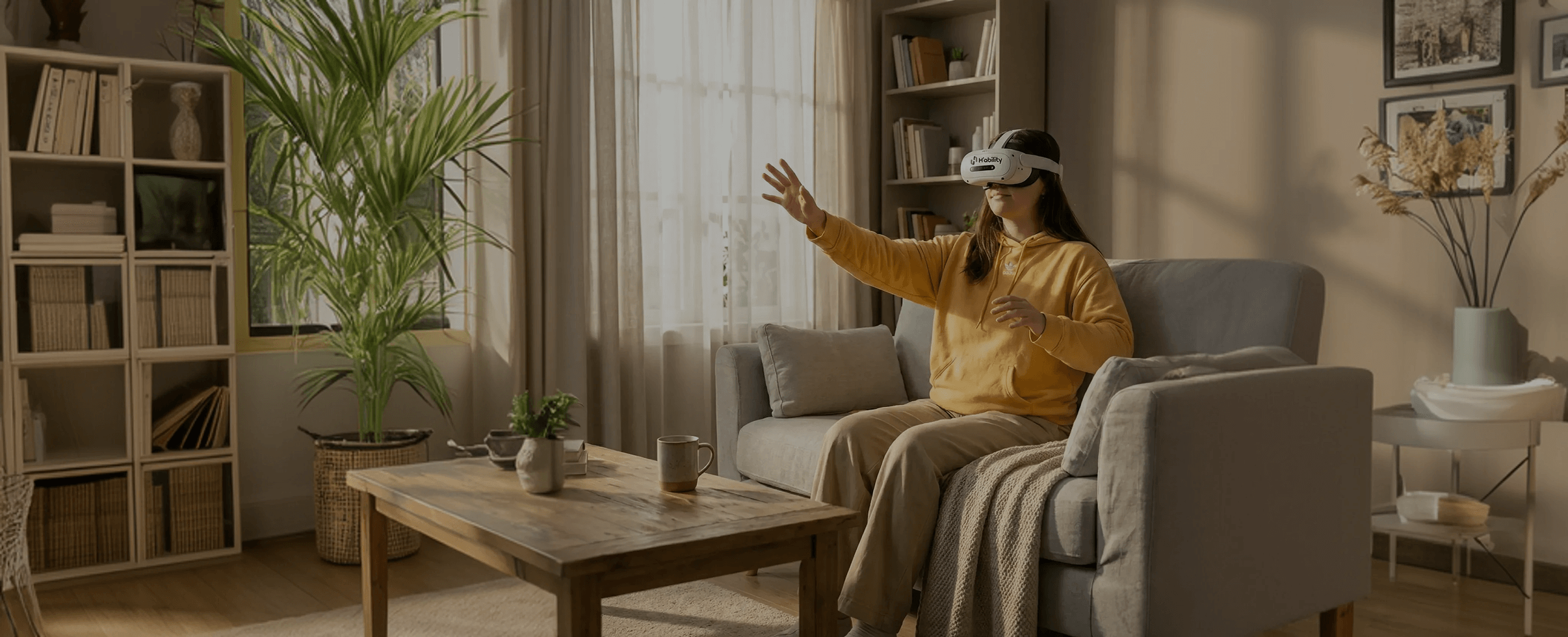
Every year in France, stroke affects about 150,000 people and is the leading cause of acquired disability in adults. While…

Chronic low back pain is one of the main reasons for physiotherapy consultation and one of the leading causes of…
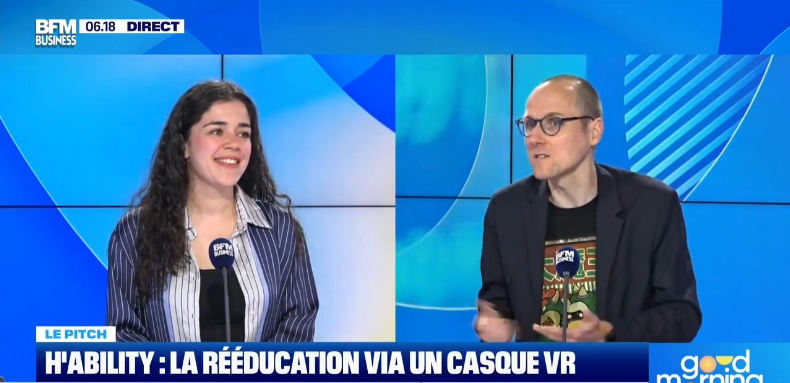
H’ability on BFM Business: virtual reality at the service of rehabilitation On May 12, 2026, H’ability was the guest of…