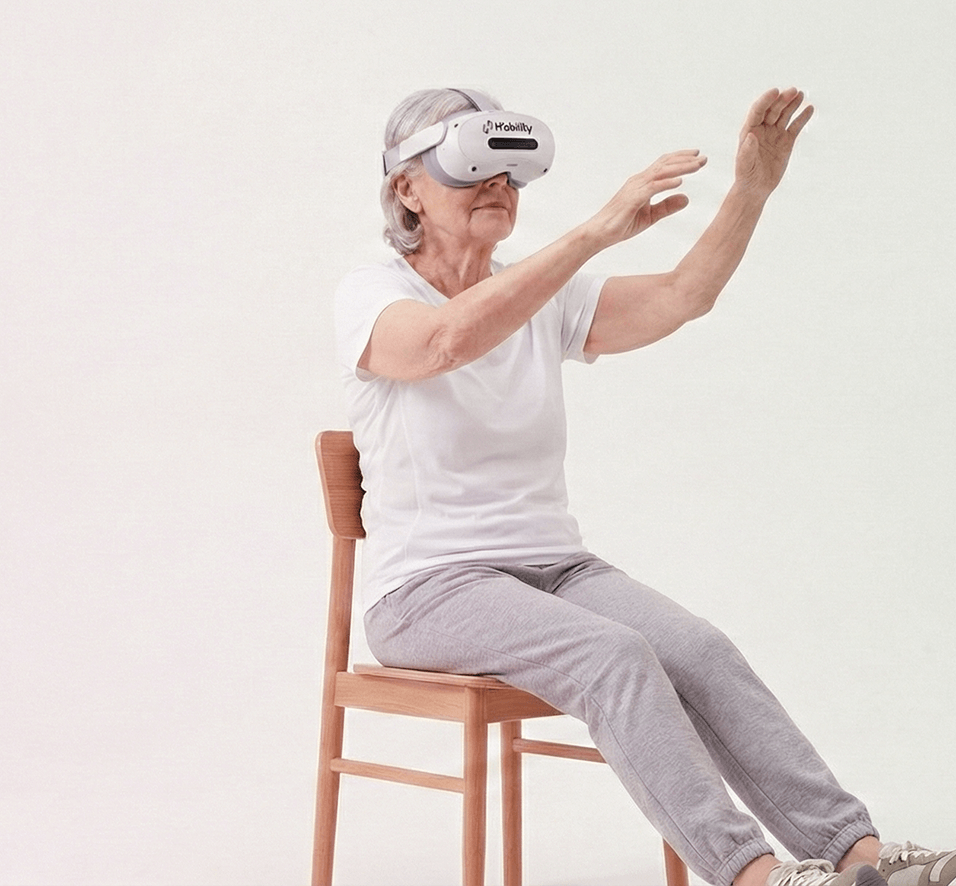
Fall prevention: the role of virtual reality
Falls are the leading cause of accidental death among people over the age of 65. Beyond the physical trauma, it…


Dr. Frank Wein is a specialist in knee surgery and sports surgery at the ARCTIC’S Center for Joint and Sports Surgery. In 2025, he participated in the co-development of H’ability exercises for lower limb rehabilitation, integrating both virtual reality (VR) and mixed reality (MR) exercises. Here, he shares his views on this collaboration and the growing role of these technologies in functional rehabilitation.
Dr. Frank Wein : I can say it with transparency: working with a team that does not come from the medical world but that seeks to understand our needs without prejudice is rare.
As a caregiver, it is very pleasant to collaborate with a team that seeks first to meet the needs of practitioners rather than imposing a vision. I would say that your ability to listen is what struck me the most at the beginning. In my opinion, H’ability has a real capacity for innovation: no dogmas, a sincere desire to learn and adapt technology to the realities of the field.
I think VR can be used in all patients because it can fit a whole series of different purposes. I have a few examples of patients that immediately come to mind:
A high-level athlete who has had an operation and who will be able to rework his shooting from the first days post-operatively.
A disabled and bedridden patient who will be able to continue working in bed without permanent assistance thanks to the helmet.
A patient in the active rehabilitation phase who will benefit from exercises targeted to a specific gesture or function.
First of all, it is important to distinguish between augmented reality and mixed reality. For me, augmented reality is mainly used to add visual information or feedback on performance: “Did I do the right thing?”
Mixed reality, on the other hand, goes further: it allows interaction between virtual objects and the real environment. It is a particularly suitable tool for rehabilitation, as it maintains the link with the physical world while adding stimulating elements.
The patient remains in his or her usual environment (he or she sees his or her body, the room, the real landmarks, etc.) while benefiting from an enriched working environment.
I like to compare it to GPS : when you know a route by heart, you don’t need help to get there. But when you find yourself in a new situation, or after a loss of bearings, this guidance becomes essential. Mixed reality is GPS to help your body regain self-control.
My specialty is knee surgery and sports surgery. Naturally, I will think of patients that I frequently meet, such as the athlete after a ruptured anterior cruciate ligament who must regain coordination and precision. But the scope is obviously much broader. I am also thinking, for example, of the elderly patient who has had a knee prosthesis placed and who will therefore need to re-work on balance and walking. Dual-tasking exercises combining upper and lower limbs can also be considered, useful for proprioception and fall prevention.
What I like about this approach is that it has no limits : we can refine the protocols, complicate the situations and adapt the exercises as closely as possible to the functional objectives of each patient.
Yes, because you can’t progress without evaluation. Objective data is essential to understand where progress is being made and where blockages persist.
We are in the digital age. For a long time, medicine has wondered what place to give to these technologies and today their contribution is obvious. Of course, this is a help, not a substitution. But it will be much easier for the caregiver to stimulate the very dependent and bedridden patient and to offer him or her a variety of things thanks to VR.
Human resources are precious; If certain tasks can be entrusted to reliable tools without affecting the quality of care, it must be done. Both the patient and the practitioner have everything to gain.
Contact us to book a demo and discover how mixed reality and virtual reality can enrich your care.
Falls are the leading cause of accidental death among people over the age of 65. Beyond the physical trauma, it…
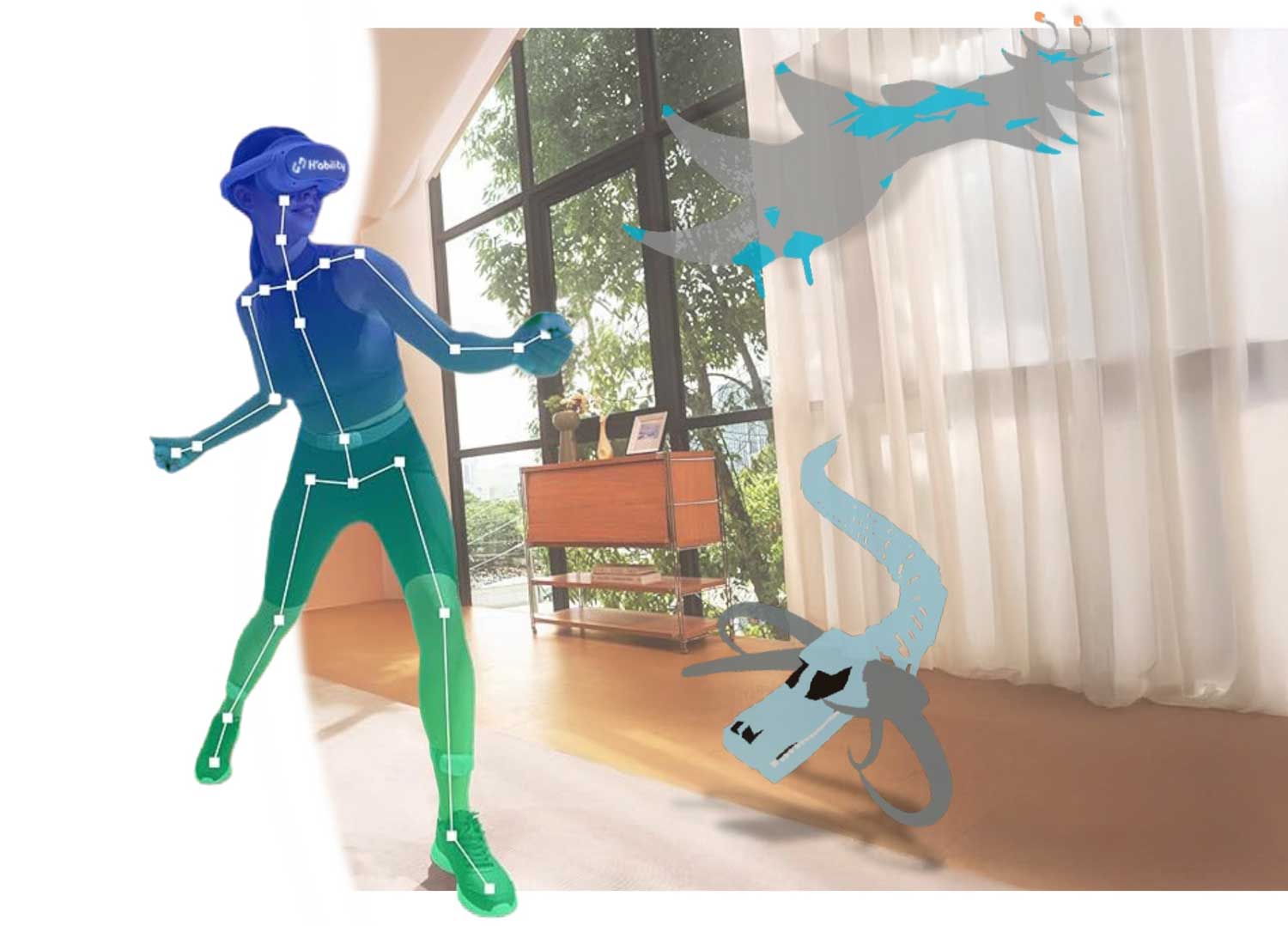
This is another important step for H’ability: home rehabilitation finally becomes a reality with the official launch of H’ability Home.…
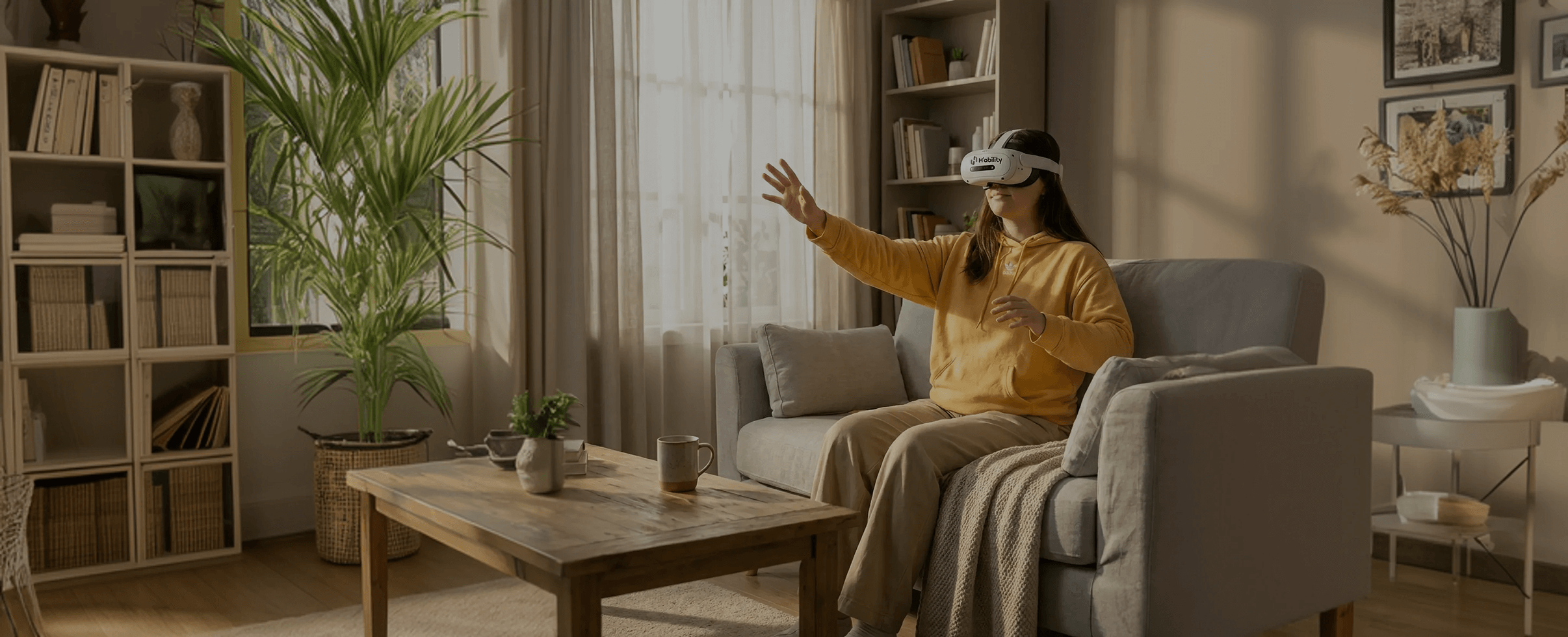
Every year in France, stroke affects about 150,000 people and is the leading cause of acquired disability in adults. While…