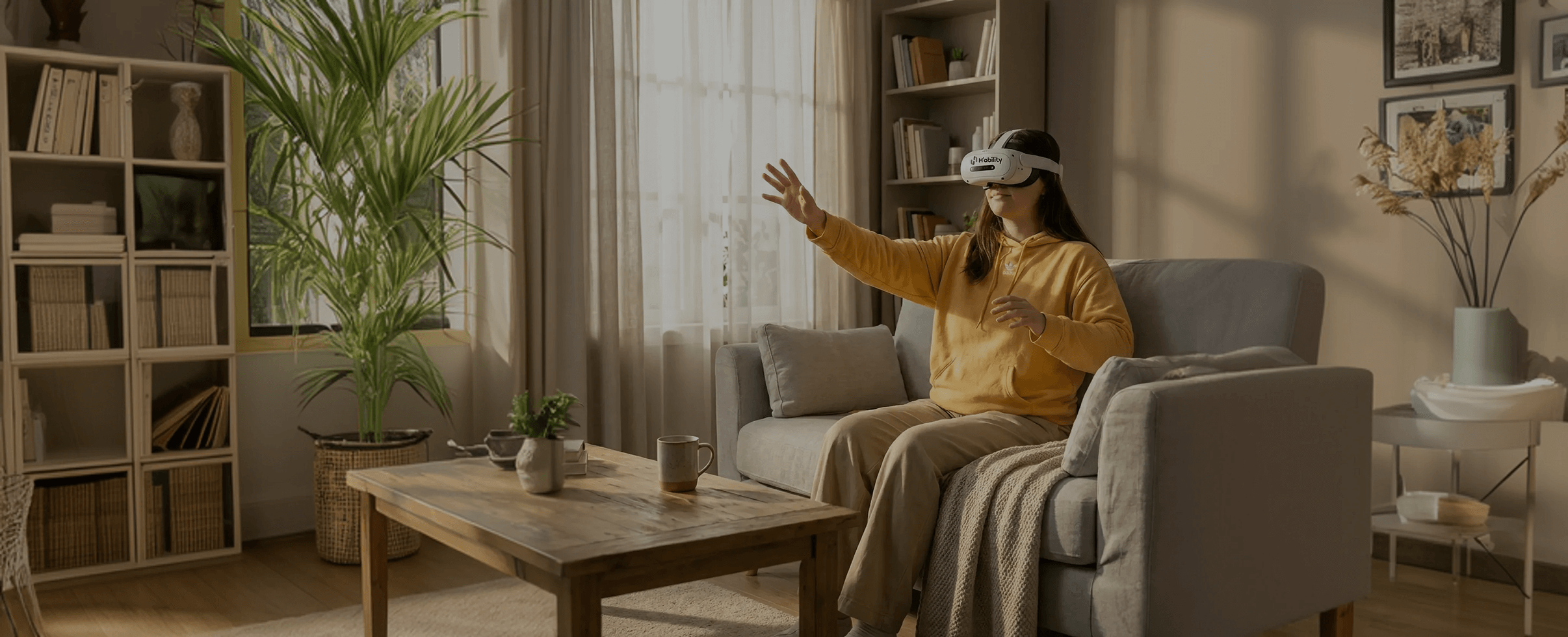
Post-stroke journey: the disruption of the return home and the solutions
Every year in France, stroke affects about 150,000 people and is the leading cause of acquired disability in adults. While…


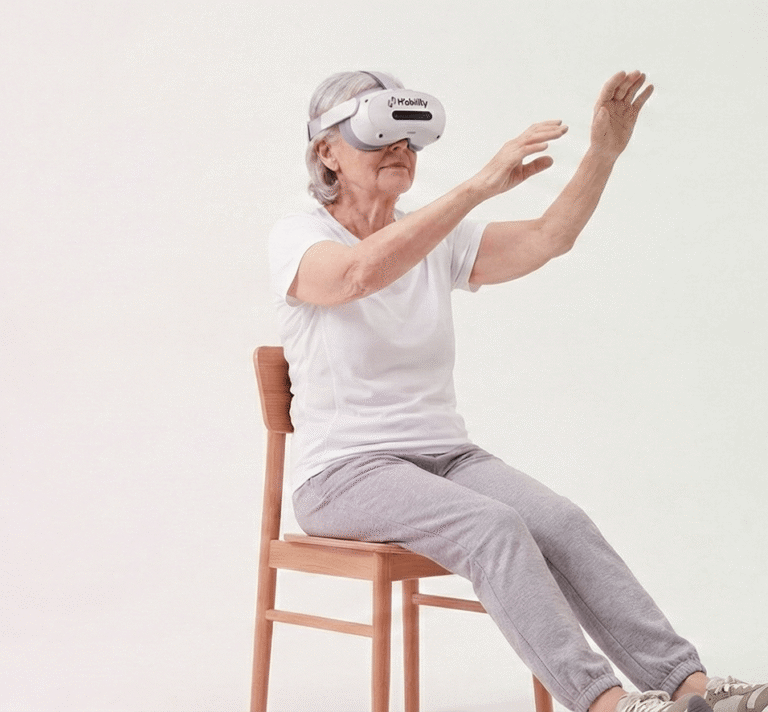
Falls are the leading cause of accidental death among people over the age of 65. Beyond the physical trauma, it often leads to a loss of confidence and deconditioning that increases the risk of recurrence. For physiotherapists and occupational therapists, fall prevention is therefore a central issue in geriatric care. How can virtual reality strengthen this prevention and support post-fall rehabilitation? This article provides an update on the clinical data and specialized exercises of the H’ability device.
Every year in France, falls affect a large proportion of the elderly and are a public health problem. About one in three people over the age of 65 experience at least one fall per year, and this risk increases with age.
But the danger is not limited to the fall itself. After a first episode, many patients develop post-fall syndrome : the fear of falling again leads them to reduce their movements and physical activity. However, this reduction in activity leads to muscle wasting and a deterioration in balance, which paradoxically increases the risk of falling again.
Breaking this vicious circle is one of the priority objectives of rehabilitation. It is about restoring not only balance and strength, but also the patient’s confidence in their own movement abilities.
The effectiveness of virtual reality in this field is now solidly documented. Several recent meta-analyses confirm this.
The most comprehensive review is by Wang et al. (2024), published in Geriatric Nursing. From 22 randomized controlled trials, the authors conclude that virtual reality training improves walking, static and dynamic balance, builds lower limb strength, and reduces the risk of falls in non-dependent older adults. VR is thus presented as a relevant complementary tool to limit falls and their consequences.
For its part, the meta-analysis by Lee et al. (2024), published in Gait & Posture, confirms the benefitsof immersive virtual reality training on balance, walking and mobility in older adults. These results reinforce the interest of immersive devices such as H’ability.
Finally, the Beauclair clinical study (2025), conducted on post-femoral neck fracture patients, showed a significant reduction in kinesiophobia (fear of movement) in the group that benefited from virtual reality. However, this fear of movement is a key factor in post-fall syndrome. To learn more, see our clinical study on fall patients.
The mechanisms by which VR contributes to fall prevention are now well understood. There are three main ones.
The H’ability system offers several categories of exercises specially adapted to fall prevention and post-fall rehabilitation:
To discover all the clinical situations covered, consult our H’ability therapeutic indications.
It is essential to remember that virtual reality does not replace conventional fall prevention exercises or the expertise of the practitioner. It acts as a complementary tool, which enriches the care and strengthens the patient’s motivation. Evaluation and follow-up are still carried out by the physiotherapist or occupational therapist. In addition, the H’ability device is not indicated for patients with severe behavioral disorders, and a prior evaluation is recommended for patients sensitive to motion sickness.
Is virtual reality effective for fall prevention?
Yes. A meta-analysis by Wang et al. (2024), looking at 22 randomized controlled trials, shows that virtual reality training improves walking, static and dynamic balance, strengthens lower limb muscle strength, and reduces the risk of falls in non-dependent older adults.
Why is rehabilitation after a fall important?
After a fall, the patient often develops a fear of falling again (post-fall syndrome), which leads to a reduction in activity. Indeed, this deconditioning aggravates the loss of balance and paradoxically increases the risk of a new fall. This is why post-fall rehabilitation aims to restore balance, strength and above all confidence in movement.
How does virtual reality reduce the risk of falling?
Virtual reality places the patient in situations of controlled and secure instability, which solicit dynamic balance, proprioception and postural reflexes. In addition, it allows you to work on the dual cognitive-motor task, which is common in everyday falls, without the risk of real falls during exercise.
Which patients can benefit from RV fall prevention?
Fall prevention by virtual reality is mainly aimed at elderly people with a balance disorder, patients in post-fracture rehabilitation, as well as neurological patients (stroke, Parkinson’s). On the other hand, use is always done under the supervision of a health professional.
Does VR replace conventional fall prevention exercises?
No. Virtual reality is a complement to conventional balance exercises, not a substitute. Indeed, studies show that it acts as an effective additional tool to improve outcomes, in particular by increasing patient motivation and engagement over time.
References:
Every year in France, stroke affects about 150,000 people and is the leading cause of acquired disability in adults. While…
Chronic low back pain is one of the main reasons for physiotherapy consultation and one of the leading causes of…

H’ability on BFM Business: virtual reality at the service of rehabilitation On May 12, 2026, H’ability was the guest of…
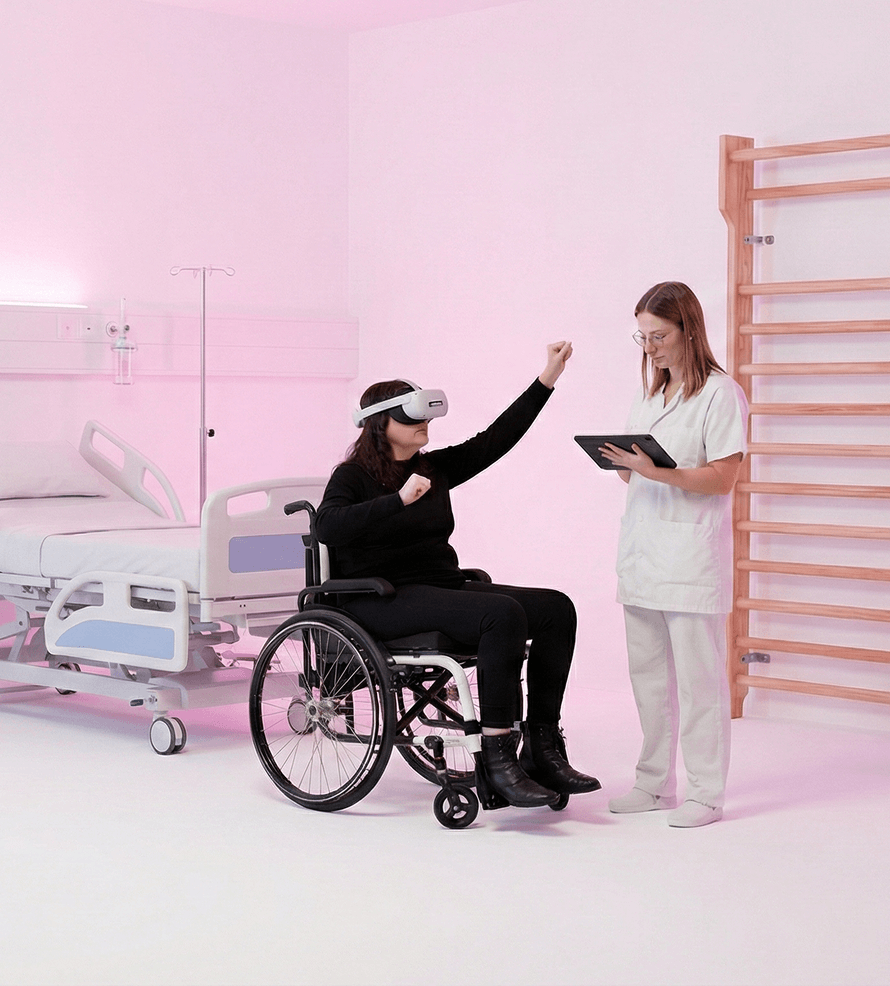
The career of Blandine Le Mené, a private occupational therapist, and her use of virtual reality How can virtual reality…